
Neuroliteracy
Why Understanding the Brain and Brain Technologies Matters More Than Ever

As conversations about neurotechnology accelerate, one concept keeps resurfacing for me: ‘’neuroliteracy’‘.
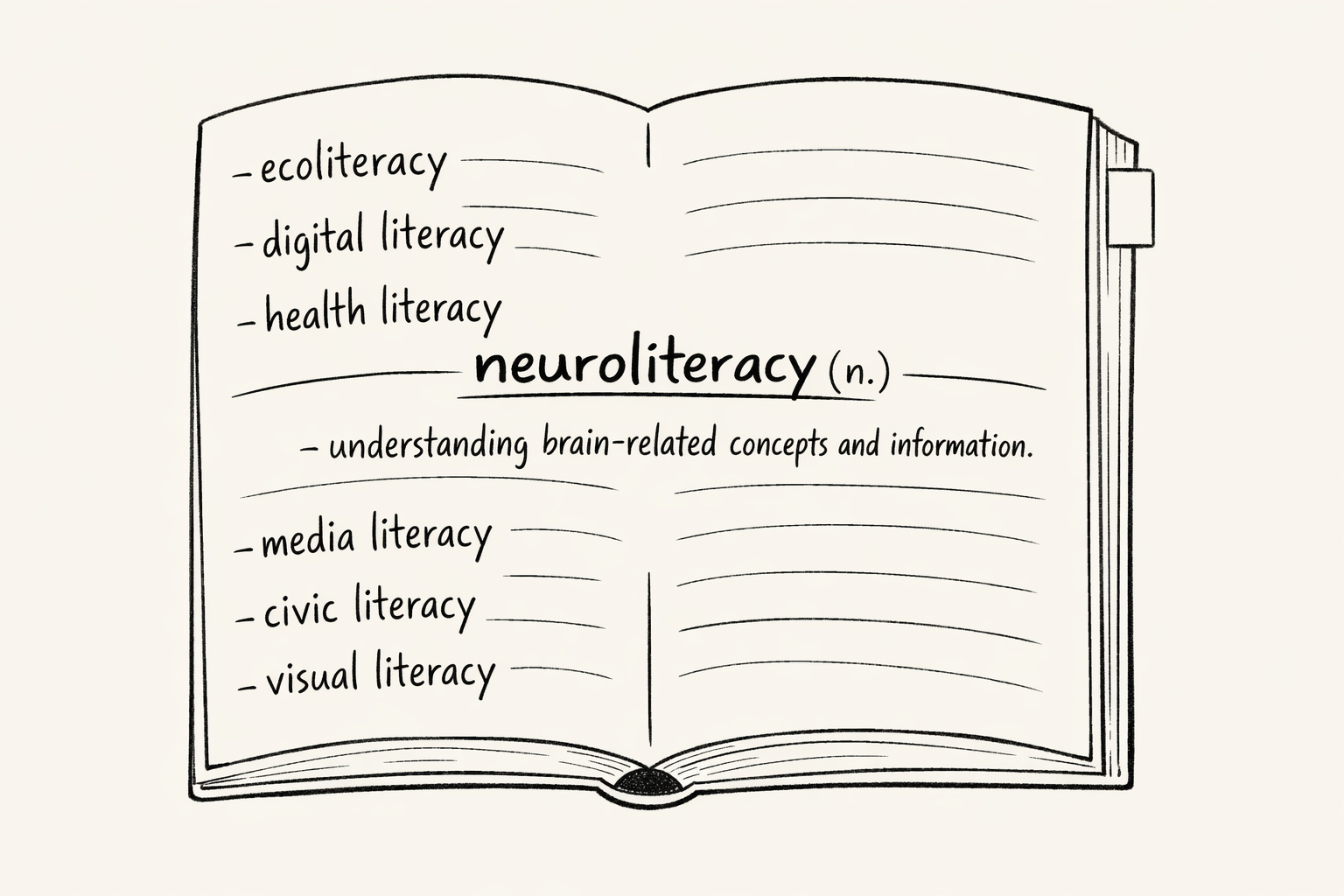
As an obsessive practitioner of continuous learning, my to-do list often doubles as a to-learn list. Neuroliteracy landed there recently while I was researching a near-future novel set in 2065. That work pulled me into current and emerging research on brain implants, neurodegenerative disease, memory, and brain–computer interfaces. What began as speculative research quickly became something more practical. The deeper I went, the clearer it became that neuroliteracy is not a niche concern for researchers or technologists. It is a foundational skill that belongs on everyone’s learning list.
Neuroliteracy does not mean understanding neuroscience at a technical level. It is closer to health literacy or digital literacy. It is the ability to make sense of claims about the brain, to recognize what current technologies can and cannot do, and to participate meaningfully in decisions that affect one’s cognitive life.
This matters for everyone, but it matters especially for older adults.
Older adults are more likely to encounter neurotechnologies in situations of vulnerability: neurodegenerative disease, cognitive decline, caregiving transitions, and changing levels of autonomy. In these contexts, decisions are rarely made by individuals alone. Family members, caregivers, and clinicians become part of the decision-making process. Without a shared baseline of understanding, informed consent risks becoming procedural rather than meaningful. I have seen how easily this happens. Forms are signed not because the implications are clear, but because time is short, stress is high, and the alternatives feel limited.
Neuroliteracy also matters outside clinical settings. Increasingly, products aimed at “maintaining” or “enhancing” cognition in normal aging are marketed directly to consumers. These offerings often operate with limited regulatory oversight and exaggerated claims. Distinguishing evidence-based support from neuro-hype requires a basic ability to interpret brain-related language and data claims.
Importantly, neuroliteracy is not only an individual responsibility. It is shaped by how technologies are designed, how clinicians communicate, how media frames scientific advances, and how regulators set expectations. Poor communication and opaque systems undermine neuroliteracy even when information technically exists.
From a neurorights and neuroethics perspective, neuroliteracy is foundational. Rights, consent, and agency depend on understanding. Without it, protections exist on paper but fail in practice.
Preparation for aging is typically framed in practical terms: finances, housing, and insurance. What is far less commonly addressed is the need to understand how aging affects the brain, cognition, and decision-making, precisely the domains where neuroliteracy becomes essential.
Oversight and governance play an important role, but they are not sufficient on their own. Neuroliteracy asks something of individuals as well: the willingness to understand the technologies that shape their cognitive lives, rather than outsourcing that responsibility entirely to rules and regulators.
In future posts, I will look more closely at the reinforcing cycles of research, technology, and investment that shape neurotechnology, and why those dynamics make neuroliteracy increasingly necessary.
To learn more:
For readers who want to begin building neuroliteracy, a useful first step is developing a shared vocabulary and a realistic sense of what brain science can and cannot currently explain. The Dana Foundation offers clear, public-facing resources designed for that purpose.
The World Brain Health Forum 2026 is happening this week in Paris. I will explore from across the ocean.
https://youtu.be/bu2knbQZ7Ik